
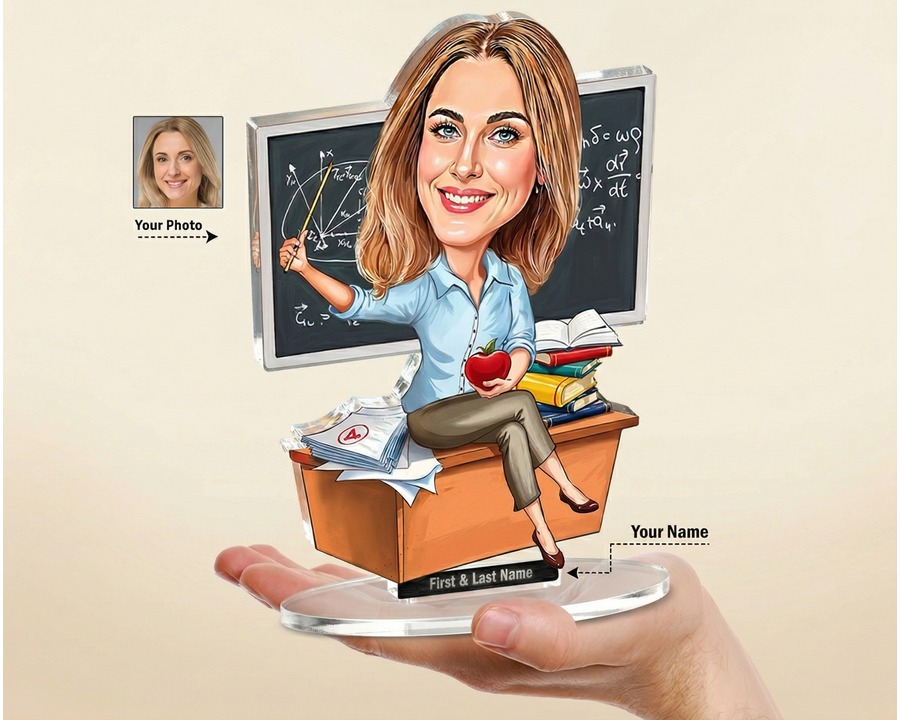


The PE Teacher's Overlooked Role
In the public imagination, PE teachers are a stock character: the whistle-wearing figure who runs laps or supervises dodgeball. The reality is different. Physical education teachers develop motor skills, teach lifetime fitness habits, manage the social dynamics of competitive and non-competitive students, and often coach one or more sports programs outside their teaching hours.
For many students, the PE teacher is the first adult who taught them to enjoy physical activity — or the one who made them believe they could compete, run a mile, or play a sport they loved for the rest of their lives. That impact is real and lasting, and it is rarely acknowledged.
Generic teacher gifts — apples, mugs, "World's Best Teacher" plaques — are even less appropriate for PE teachers than for classroom teachers, because they do not connect to the specific and physical nature of what PE teachers do.
Custom Figurines for PE Teachers
A custom figurine of a PE teacher, made from their photograph, acknowledges the specificity of their role. Choose a figurine form that reflects how they look on the gym floor, the field, or the track — in athletic attire, with a whistle, in the coaching posture that students recognize.
Upload a clear, front-facing photograph. The UV printing captures facial features, athletic wear, and the recognizable details that make the figurine look like the actual teacher rather than a generic coach.
For a PE teacher who also coaches a sport — which is most of them — a figurine made in their coaching context rather than a classroom context is the more personally resonant choice.
Featured education figurines
Best Occasions for a PE Teacher Gift
End of year. For students and parents who want to thank a PE teacher whose influence extended beyond the gym, end of year is the natural moment. A custom figurine from a class, a team, or a grateful family is the tribute that outlasts the school year.
Teacher Appreciation Week (first week of May). Schools and parent groups who want to recognize PE staff alongside classroom teachers find that a custom figurine is one of the few gifts specific enough to the person to feel genuinely thoughtful rather than generic.
Retirement. A PE teacher and coach who has spent a career on the gym floor, the field, and the track — who has guided hundreds of students through fitness, sport, and competition — deserves a retirement gift equal to that career. A custom figurine is the keepsake that honors the full scope of it.
Coaching milestones. A tenth season, a championship, a hundred wins — coaching milestones are worth marking. A figurine from the team, commissioned by players and parents together, is the recognition that a trophy does not quite provide.
For the Student-Athletes They Coached
Many PE teachers are best remembered as coaches — the person who ran the cross-country team, the wrestling program, the girls' basketball team for twenty years. For student-athletes who were shaped by that coaching relationship, a custom figurine is a way to honor the person who mattered.
A figurine ordered by alumni of a program — former players who look back on their coach as genuinely influential — is a tribute that carries a different weight than anything bought in a store. It communicates: we remember, specifically, what you gave us.
For a retiring coach, a figurine presented at a farewell banquet, surrounded by the players whose careers were shaped by that program, is a moment that most coaches will remember for the rest of their lives.
Acrylic or Wood for a PE Teacher?
Acrylic suits contemporary school settings and modern home environments — polished, clear, and bright. It tends to be the choice for figurines that will be displayed in an office, a gym trophy case, or a contemporary home.
Wood is warmer — appropriate for a coach who prefers traditional aesthetics or for a home display in a classic setting.
The 12" size is the standard for a professional appreciation gift. For a retirement or a very significant coaching milestone, the 14" communicates the scale of the occasion.